

BEIJING, Aug. 26 (Xinhua) -- In just five years, the Belt and Road Initiative has grown from a concept to a key platform for building a community with a shared future for humanity and a well-received international public goods.
The following are some key facts about it.
-- In the autumn of 2013, respectively in Kazakhstan and Indonesia, Chinese President Xi Jinping proposed the building of the Silk Road Economic Belt and the 21st Century Maritime Silk Road.
-- The initiative's top-level design has been completed, with basic structures set up. Important resolutions passed by the UN General Assembly and Security Council contain reference to it.
-- As of July 2018, more than 100 countries and international organizations had signed Belt and Road cooperation documents with China, extending the initiative's scope from the Eurasian continent to Africa, Latin America and the Caribbean, and the South Pacific region.
-- On Nov. 8, 2014, China announced contributing 40 billion U.S. dollars to set up a Silk Road Fund to support the Belt and Road projects.
-- On March 28, 2015, China released the vision and actions on jointly building the Silk Road Economic Belt and 21st Century Maritime Silk Road.
-- On Dec. 25, 2015, the China-initiated new multilateral financial institution Asian Infrastructure Investment Bank was established.
-- On May 14-15, 2017, the first-ever Belt and Road Forum for International Cooperation was held in Beijing, attended by state and government leaders of 29 countries. The more than 1,600 participants came from over 140 countries and 80 international organizations.
-- On Oct. 24, 2017, pursuing the Belt and Road Initiative was written into the Constitution of the Communist Party of China.
-- About 95 percent of the 279 items on the outcome list of the Belt and Road Forum for International Cooperation had been accomplished as of July 2018. The 14 others are being worked on.
-- As of Aug. 26, 2018, the number of China-Europe freight trains has reached 10,000.
-- In the past five years, China's trade in goods with countries along the Belt and Road exceeded 5.5 trillion U.S. dollars. Chinese direct investment in the non-financial sectors of these countries reached 80 billion U.S. dollars.
-- In the past five years, China set up 82 overseas economic and trade cooperation zones in countries along the Belt and Road, investing 28.9 billion U.S. dollars and creating about 244,000 local jobs. As of May 2018, China had signed 16 free trade agreements with 24 countries and regions, nearly half of which are countries along the Belt and Road.
-- In the first seven months of 2018, Chinese companies raised investment in 54 countries along the Belt and Road. The 8.55-billion-U.S. dollar newly added investment represented an 11.8 percent increase year on year. New construction contracts along the Belt and Road worth 57.11 billion U.S. dollars.
-- Under the initiative, China has set up 81 education institutions and projects as well as 35 cultural centers in countries along the Belt and Road. In the first half of 2018, China spent over 270 million yuan (around 39.3 million U.S. dollars) on the Silk Road scholarships.
 Fire brigade in Shanghai holds group wedding
 Tourists enjoy ice sculptures in Datan Town, north China
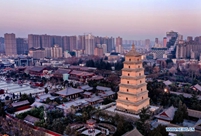 Sunset scenery of Dayan Pagoda in Xi'an
 Tourists have fun at scenic spot in Nanlong Town, NW China
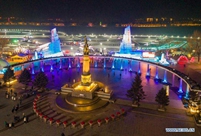 Harbin attracts tourists by making best use of ice in winter
 In pics: FIS Alpine Ski Women's World Cup Slalom
 Black-necked cranes rest at reservoir in Lhunzhub County, Lhasa
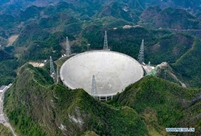 China's FAST telescope will be available to foreign scientists in April
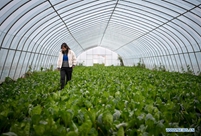 "She power" plays indispensable role in poverty alleviation
 Top 10 world news events of People's Daily in 2020
 Top 10 China news events of People's Daily in 2020
 Top 10 media buzzwords of 2020
 Year-ender:10 major tourism stories of 2020
 No interference in Venezuelan issues
 Biz prepares for trade spat
 Broadcasting Continent
 Australia wins Chinese CEOs as US loses



 手机在线观看日韩av